Is Dark worth watching? Rewarding, but demanding
Yes, if you want a completed sci-fi mystery that rewards close attention. Dark makes its tangled family relationships matter, but its gloom and complexity demand the right mood.
By Mohammad Alzeer5 min read
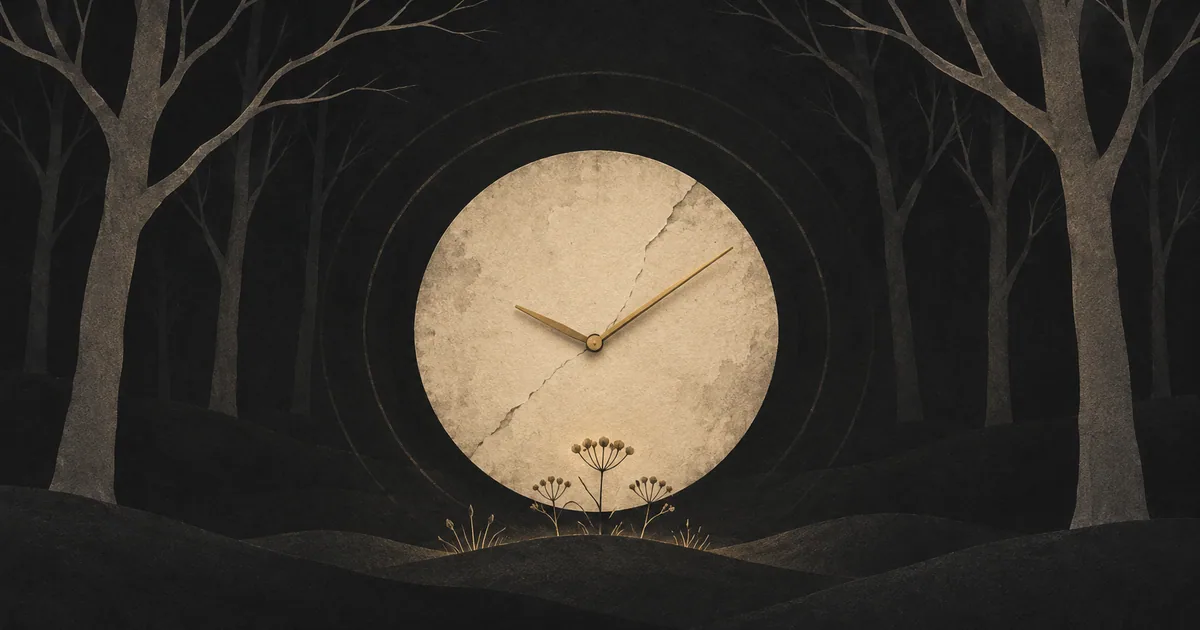
Yes, Dark is worth watching if you want a completed sci-fi mystery that rewards close attention. Our verdict: its tangled family relationships make the time travel matter, but the relentless gloom and growing complexity won't suit every night.
This spoiler-free review covers the premise, the appeal and the reservations. No identities revealed, no family-tree solutions and no ending explained.
Is Dark worth watching? Our verdict
We recommend Dark for deliberate viewing, especially if you enjoy forming a theory and then having to reconsider it. We'd pass if you're looking for a comforting ensemble or something to follow while your attention is elsewhere. The work of keeping track is part of the experience.
Netflix's official listing credits creators Baran bo Odar and Jantje Friese and lists 3 seasons. Its starting point is a child's disappearance that draws 4 families into a mystery stretching across generations.
That gives you a useful expectation before you start: family drama carries the mystery. Learning how people connect matters as much as learning what happened.
Our strongest reason to recommend it is the question beneath the machinery. If you could change a painful event, how much harm would you risk doing in the attempt?
What is Dark about without spoilers?
Dark begins in the German town of Winden, where a missing child exposes connections and secrets across generations. Time travel becomes central to that story. Knowing that much won't spoil the main appeal; learning the specific relationships in advance could.
Start with season 1, episode 1. Resist the urge to study a complete character chart beforehand. Even an image search can answer a question the show wants you to sit with.
The premise invites you to watch people as closely as events. Who avoids a conversation? Who seems to know more than they admit? Who believes they're protecting someone?
Those questions make an ordinary family scene carry tension before you understand its place in the wider story.
Why does the time travel work?
Dark's time travel works best when it gives a familiar human impulse frightening consequences. Wanting to protect a child or undo a loss is understandable. The possibility of acting on that desire makes the moral problem harder: being sincere doesn't guarantee that your intervention helps.
Nerdist's critical overview highlights grief as a force behind the characters' decisions and describes the series' attention to time-travel rules. Our reading is that those two elements need each other.
Rules alone would leave you admiring a mechanism. Grief gives someone a reason to interfere with it.
That's the standard we'd use to judge the reveals. Does learning something change your understanding of a person's choice? When it does, a connection carries emotional weight beyond the satisfaction of having spotted it.
You can enjoy the theories without treating every conversation as a test you're supposed to ace.
What might put you off Dark?
The biggest reservations are the somber tone and the amount of information you need to hold in mind. Complexity can be absorbing, but it can also create distance. If you're concentrating on identifying everyone, you may have less room to care about what they're feeling.
We think that's the real tradeoff. A larger pattern can make a small gesture devastating. It can also reduce a person, for a while, to their place in that pattern.
The mood asks something of you too. This wouldn't be our choice when you want warmth or frequent comic relief. Give yourself permission to watch it on a different evening rather than forcing your way through because you've heard it's essential.
It's also mature viewing. Netflix's US listing rates it TV-MA. The opening includes suicide and distress around missing children; consider those subjects before starting.
The acclaim doesn't create an obligation. If you dislike the experience of uncertainty itself, another clever reveal probably won't change that preference.
Does Dark finish its story?
Yes. Dark has a completed 3-season story. Netflix's Media Center identifies season 3 as the final season, so you can begin knowing this isn't a series still waiting for another season to finish its central narrative.
That matters for a mystery asking for sustained attention. You're committing to a finite story.
Our recommendation still isn't a promise that every detail will satisfy you. An ending can provide closure while leaving room to argue about its choices. We'll keep those arguments out of a first-watch review.
Will you like Dark if you liked Severance?
Dark is a worthwhile next consideration if Severance made you enjoy discussing identity, agency and what people know about their own lives. The connection is the pleasure of revising your understanding. Don't expect the same tone or the same kind of workplace humor.
Our spoiler-free Severance review focuses on the moral cost of dividing a person's memories. Dark gives you another way to think about how much control someone has over a life shaped by information they don't possess.
If you primarily want Severance's office satire, that connection may be too thin. If you want another show to discuss carefully after each episode, it's a stronger match.
How should you watch Dark without spoiling it?
Watch in order and keep searches specific to the last episode you've finished. Avoid complete family trees and later-season trailers. If you need notes, record only names, relationships and questions established so far. You don't need to solve the whole show before continuing.
The designers of the official companion guide describe its episode-based spoiler filtering in Communication Arts. That design choice captures a useful principle for any recap: information should stop where your viewing stops.
For a shared first watch, agree on an episode checkpoint. Our guide to watching at the same pace as friends explains how to keep the conversation within what everyone has finished.
In LazyWatch, swipe to mark an episode watched, then put your theory in that episode's Comments. Keep later revelations out of earlier threads, even when you're correcting someone. A wrong theory can be part of the fun.
If you're juggling several series, keep a clear record of your last watched episode before opening a recap.
We recommend Dark when you want a mystery to spend attention on. Start with the people, let the connections accumulate, and leave the full family tree alone.
Sources
- Dark
- is Dark worth watching
- spoiler-free review
- time travel
- sci-fi TV
- Netflix